
How to Write Jealousy Without Making a Character One-Dimensional
The most convincing jealous characters are rarely simply possessive. Their jealousy usually grows from something more complicated: fear, longing, shame, insecurity, love, pride, or the terrible possibility of losing something they thought was theirs.

She sees him laugh with someone else, and for one small second, the whole room changes.
She could accuse him. She could leave. She could pretend she does not care. But the most interesting choice may be none of these. She smiles, asks an ordinary question, and remembers the laugh long after everyone else has forgotten it.
That is where jealousy becomes useful in fiction. It stops being a simple emotion and becomes information. It tells us what a character fears losing, what they believe they deserve, what they cannot admit about themselves, and sometimes what they desperately want.
To write jealousy well, I think the important question is not “How jealous should this character be?” It is “What does this jealousy reveal that the character would rather keep hidden?”
Jealousy works best when it is attached to something deeper
A jealous character becomes flat when jealousy is treated as their entire personality. If every scene gives us suspicion, accusations, possessiveness and anger, the reader eventually stops seeing a person and starts seeing a single behaviour repeated in different rooms.
Give the jealousy a root.
Perhaps the character has always felt replaceable. Perhaps they are terrified that they are less interesting than the person standing beside the one they love. Perhaps they have built their identity around being the successful one, the chosen one, the indispensable one. Or perhaps they know, somewhere beneath all their certainty, that they have neglected the relationship and are afraid someone else has noticed.
The external situation may be identical, but the emotional engine changes everything.
A character who thinks, “She is better than me,” behaves differently from one who thinks, “He is going to leave me,” or one who thinks, “I cannot believe I am becoming the kind of person who needs reassurance.”
That difference is character.
Find the fear underneath the jealousy
When you are writing jealousy, move one emotional layer deeper than the obvious reaction. Anger may be covering fear. Criticism may be covering shame. Possessiveness may be covering helplessness.
A useful exercise is to ask your character the same question several times:
- What am I jealous of?
- Why does that matter to me?
- What do I think this situation says about me?
- What am I afraid will happen next?
- What would I never admit to the other person?
Imagine a character watching her partner receive praise from a colleague. On the surface, she is annoyed by the colleague. But perhaps the deeper wound is that she has been struggling with her own work and secretly feels stagnant. The colleague’s success is not really the threat. It has simply touched a bruise that was already there.
Now the scene has somewhere to go.
She might make a sharp remark. She might become unusually quiet. She might congratulate him too enthusiastically. She might change the subject. She might even defend the colleague because admitting jealousy would feel too humiliating.
The emotion remains jealousy, but the behaviour becomes personal.
 Let the character have reasons you do not completely approve of
 One of the easiest ways to make a jealous character feel one-dimensional is to explain them too generously.
We sometimes want the reader to understand immediately that the character is secretly good, wounded, misunderstood and justified. But real emotional complexity is often messier than that.
Your character can have a legitimate fear and still behave badly.
They can love someone and still resent them.
They can know that their jealousy is unfair and continue feeling it anyway.
That contradiction is valuable.
Suppose a woman becomes jealous because her closest friend has started spending more time with someone new. The fear of being left behind is understandable. But if she deliberately makes the new friendship uncomfortable, that choice tells us something important about her character.
Maybe she is ashamed of what she has done. Maybe she doubles down because admitting fault would mean admitting how frightened she is. Maybe she apologises and then repeats the mistake months later.
Do not rush to make her emotionally correct.
Make her recognisably human.
I find jealousy most interesting when the character knows they are being unfair and still cannot quite stop themselves.
Give jealousy more than one expression
Jealousy does not always arrive as an argument. In fact, some of the strongest jealousy scenes may contain very little visible conflict.
A character might suddenly become generous. They might compliment the person they resent. They might start competing without announcing that a competition exists. They might become distracted, overly helpful, unusually formal or painfully cheerful.
Sometimes jealousy appears as withdrawal.
Sometimes it appears as control.
Sometimes it appears as indifference performed too carefully.
Think about what your particular character does with uncomfortable feelings. Their established personality should shape the jealousy rather than disappearing because the plot needs a dramatic reaction.
| Underlying fear | Possible jealous behaviour | What it reveals |
|---|---|---|
| Fear of being replaced | Watching closely, seeking reassurance, becoming withdrawn | The character’s attachment and insecurity |
| Fear of being inferior | Competition, criticism, forced confidence | The character’s fragile self-image |
| Fear of losing control | Questioning, monitoring, demanding explanations | The character’s relationship with uncertainty |
| Fear of emotional abandonment | Clinging, testing, sudden distance | The character’s need for reassurance |
| Shame about wanting more | Dismissiveness, sarcasm, pretending not to care | The character’s difficulty admitting desire |
Use the character’s strengths to shape their jealousy
This is one of my favourite ways to protect a character from becoming predictable: do not forget who they are simply because they are jealous.
A naturally observant person may notice tiny changes in someone’s behaviour. A proud person may refuse to ask for reassurance. A witty person may turn jealousy into jokes. A disciplined person may suppress the feeling until it emerges somewhere else. A compassionate person may recognise that their jealousy is unfair while still struggling with it.
The emotion should pass through the character’s existing personality.
If you remove everything about a character except jealousy, you lose the person. If you let jealousy collide with everything else they already are, you gain conflict.
Consider two characters who are equally jealous.
The first is impulsive. She sends the message she knows she should not send.
The second is controlled. She writes the message, reads it three times, deletes it, and then spends the evening behaving as though nothing happened.
The feeling is similar. The characters are not.
Let jealousy reveal something the character does not understand yet
Jealousy can be a discovery mechanism.
Your character may believe they are angry about another person’s attention, only to realise later that they are jealous because they want the attention themselves. Or they may believe they are protecting a relationship when, underneath that explanation, they are protecting their own sense of importance.
This is particularly useful when jealousy is part of a larger emotional arc.
At the beginning, the character may blame an outsider. Later, they may recognise their own insecurity. Eventually, they may understand that the real problem is not the third person at all.
That progression gives jealousy a purpose beyond creating conflict.
It changes the character.
 Do not make the rival a cardboard villain
 Another common problem appears when jealousy enters a romantic or friendship storyline: the person being envied becomes conveniently awful.
They flirt too much. They manipulate everyone. They secretly want to destroy the relationship. They become the obvious villain so the jealous character looks reasonable.
Sometimes that story is appropriate. But if the other person has done nothing wrong, there is a richer possibility: the jealousy belongs entirely to your protagonist.
That can be much more uncomfortable—and much more interesting.
The rival might be kind. They might be talented. They might genuinely care about the same person. They might even try to make space for your protagonist.
Now the jealous character has nowhere easy to put the blame.
And the reader gets to see the internal struggle rather than being handed a convenient enemy.
Build jealousy through choices, not labels
Writing “He was jealous” tells the reader what to feel. Showing us what he does allows the reader to experience the emotion with him.
Instead of repeatedly naming the emotion, let the character make choices under its pressure.
He asks a question he already knows the answer to.
She remembers an insignificant detail about someone she claims not to care about.
He laughs at the wrong moment because he does not want anyone to notice that he is hurt.
She becomes suddenly interested in leaving early.
He says, “Of course I’m happy for you,” and spends the next ten minutes rearranging objects that do not need rearranging.
These small choices carry emotional weight because the reader can interpret them.
And interpretation creates intimacy between reader and character.
Give the jealousy consequences
If jealousy never costs the character anything, it can start to feel like decorative drama.
Let it affect a decision. Let it damage trust. Let it expose a weakness. Let it create an unexpected moment of honesty. Let the character lose an opportunity because they were too proud to ask for reassurance.
But consequences do not always have to be catastrophic.
Sometimes the consequence is simply that another person notices.
Sometimes it is the character realising, too late, that they said something cruel.
Sometimes it is a quiet shift in the relationship: one person now knows something the other was trying desperately to hide.
The important thing is that the emotion changes the story.
A simple revision test for jealous characters
When revising a scene built around jealousy, I would ask a few uncomfortable questions.
- What does this character fear losing?
- What does the jealous reaction reveal about their self-image?
- Could the character behave differently because of their established personality?
- Have I allowed them to be understandable without making them automatically right?
- Does the jealousy create a choice, rather than merely an outburst?
- Does the other person exist as a full character rather than only as a threat?
- Does something change after the scene?
If the answer to all of these is yes, the jealousy is probably doing more than generating conflict. It is participating in character development.
And that is the difference I would protect most carefully.
A one-dimensional jealous character is jealous because the plot needs someone to be jealous. A layered character is jealous because the feeling touches something deeply personal—and the way they handle that feeling tells us who they are.
You do not need to make the character likeable all the time. You need to make them understandable enough that the reader can see the human being inside the contradiction.
Jealousy, after all, is rarely only about the person standing across the room.
Often, it is about the person standing inside the character.
Frequently Asked Questions
How do you make a jealous character sympathetic?
Give the jealousy a believable emotional root, such as fear of abandonment, insecurity, shame or fear of being replaced. Let the character recognise that their reaction may be unfair without automatically excusing harmful behaviour.
Can a character be jealous without being possessive?
Yes. Jealousy can appear as withdrawal, comparison, insecurity, competition, forced indifference or an exaggerated need for reassurance. Possessiveness is only one possible expression of jealousy.
How do you show jealousy instead of telling it?
Show the character’s choices, interruptions, changes in tone, attention to small details and attempts to hide what they feel. Behaviour often communicates jealousy more powerfully than repeatedly naming the emotion.
Should the person causing jealousy be a villain?
Not necessarily. Keeping the other person innocent can make the conflict more psychologically interesting because the jealous character cannot easily blame an external villain. The tension then comes from what the jealousy reveals about the protagonist.

Some distances can only be crossed with words.
“A story about the distance between two people, and the words it takes to close it.”
Available as a digital PDF and printed copy.
Explore Aadha Saans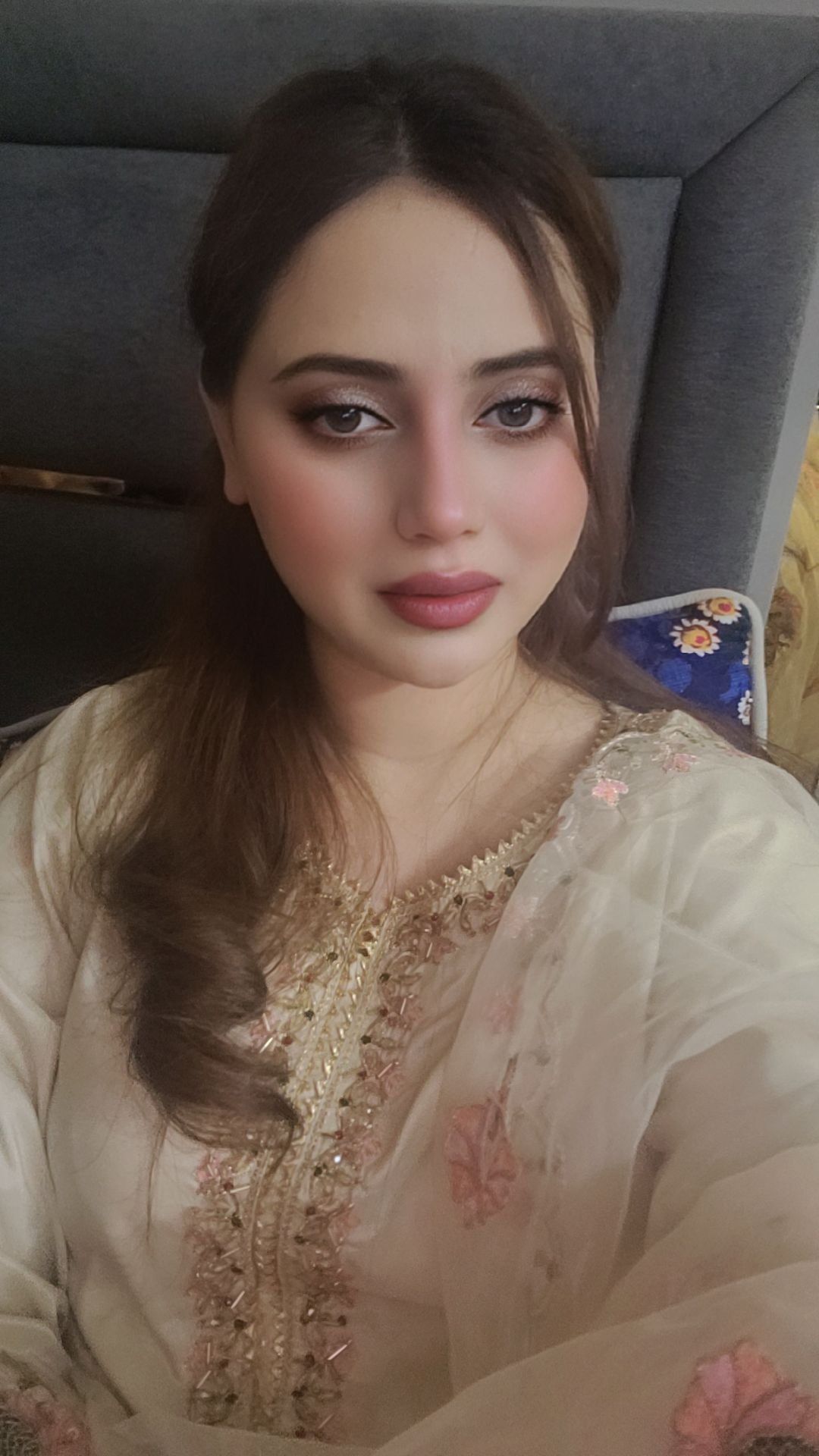
About Amna Shabib
Amna Shabib is a novelist, scriptwriter, and storyteller who writes in Urdu and English. She is the author of the debut novel Aadha Saans.
Read about Amna