
| What Should an Author About Page Include? |
Personal Brand · Author Craft
What Should an Author About Page Include?
An author About page does not need your entire life story. It needs enough of the right story to help a reader understand who you are, what you write, and why they might want to stay.

A reader arrives on an author website with a small question that can feel surprisingly intimate: Who is the person who wrote this?
That is what an About page is there to answer. Not everything. Not your entire childhood, your complete employment history, or a catalogue of every certificate you have ever earned. A good author About page gives a reader a clear sense of who you are, what you write, what matters in your work, and where they can go next.
If you have been searching for author About page examples, the useful thing to study is not a particular template. It is the thinking underneath the page. The strongest examples usually understand that an About page sits between biography and invitation. It introduces the writer, but it also opens a door into the work.
Start with the question your reader is really asking
Before writing a single paragraph, I find it helpful to imagine the reader arriving after seeing a book cover, reading a story, hearing your name, or finding one of your articles.
They probably are not asking, “Can I have the complete chronology of this person’s life?”
They are asking something closer to: Who is this writer, what kind of stories does this person tell, and do I want to know more?
That changes the page immediately.
Your About page becomes less like a résumé and more like a conversation. You still need facts. In fact, factual clarity is part of what makes a page trustworthy. But facts need shape. They need a reason for being there.
For a novelist, that might mean naming the kind of fiction you write, introducing the themes you return to, mentioning your published work, and giving readers a small glimpse of the person behind it. For a screenwriter, the emphasis might naturally include scripts, genres, credits, or the kinds of stories you develop. The details change with the writer. The reader’s need for orientation does not.
The essential pieces of a strong author About page
There is no single formula that every writer needs to follow, but I would build an author About page around a handful of useful pieces.
1. A clear introduction
The first few lines should tell the reader who you are without making them work for it.
Your name should be easy to find. So should your role. “Novelist and scriptwriter” tells me something immediately. “Writer, storyteller, dreamer, believer in magic…” may sound attractive, but it leaves me waiting for the concrete information.
You can be warm without becoming vague.
2. What you write
Tell readers what lives on the other side of your name.
Do you write novels? Screenplays? Essays? Poetry? Children’s fiction? Literary fiction? Romance? Crime? Or several forms at once?
You do not need to reduce yourself to a marketing label if your work resists neat categories. But a reader should leave the opening section with some understanding of your creative territory.
3. Your author story
This is where the About page can become more human.
You do not need to tell your whole life story. Instead, consider the smaller question: What helps explain the writer I am today?
Perhaps there is a recurring subject in your work. Perhaps you move between languages. Perhaps you are interested in the space between what people say and what they leave unsaid. Perhaps your work keeps returning to family, memory, displacement, desire, belonging, humour, or grief.
That kind of detail gives readers something to hold onto.
4. Your books or major work
If you have published books, make them easy to find. If you are a debut author, one book is enough. You do not need to make a single title look like a disappointing bookshelf by surrounding it with unnecessary filler.
For a working screenwriter, the equivalent might be selected scripts or relevant credits. The principle is the same: show the reader what you actually make.
5. Relevant credentials
Credentials belong on an About page when they help the reader understand your work or establish useful professional context.
That might include a publication, award, relevant professional background, or documented role. It does not mean every achievement needs to be given equal space.
I tend to think of credentials as supporting characters. They matter, but they should not take over the story.
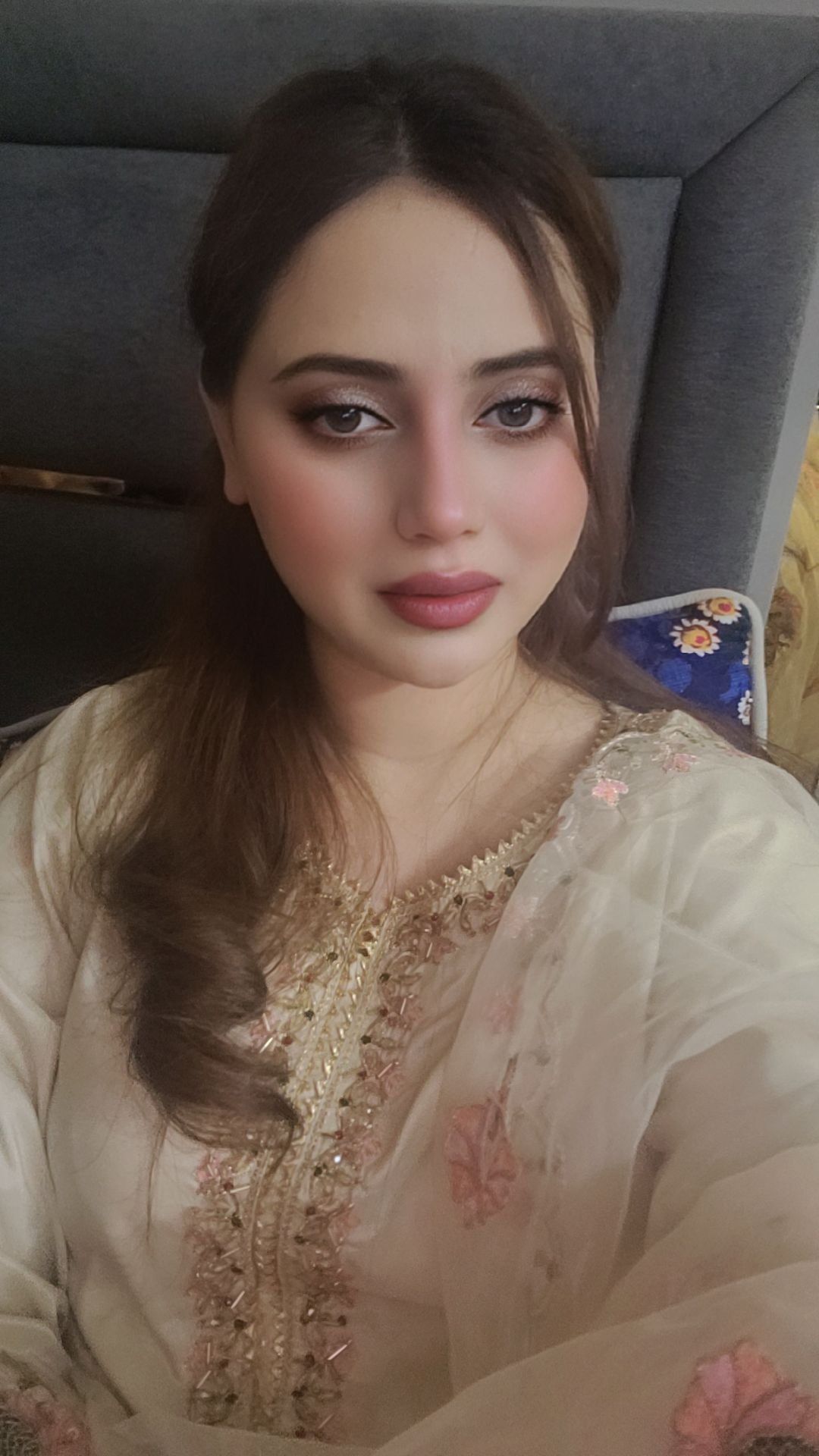
6. A real photograph
A photograph does something words cannot quite do. It gives the name a face.
It does not have to look stiff or corporate. It simply needs to be clear, appropriate to your public author identity, and recognisably you. The photograph and the writing should feel as though they belong to the same person.
7. A next step
An About page should not end in a dead end.
Once a reader has learned who you are, make the next useful choice obvious. They might want to explore your books, read your work, contact you, follow your updates, or learn more about a particular project.
The important thing is not to give them twelve competing instructions. Give them somewhere natural to go.
A simple About-page checklist
- Your name and clear author role
- A concise explanation of what you write
- A personal or creative thread that makes the page feel human
- Relevant books, scripts, or other major work
- Credentials that genuinely add context
- A good author photograph
- A clear next step for the reader

Your About page should sound like you
This is the part I care about most.
You can have every correct ingredient on the page and still end up with something that feels strangely lifeless.
A writer’s About page should have some relationship to the voice of the work. That does not mean turning the biography into a piece of fiction. It means allowing your natural way of speaking to survive the editing process.
If your novels are intimate and observant, an About page that suddenly sounds like a corporate press release will create a small emotional distance. If your work is playful, the page can have some playfulness. If your work is spare, there is no need to decorate every sentence.
I want an About page to tell the truth about the writer without making the writer disappear behind the biography.
One useful test is to read the page aloud.
Listen for sentences you would never actually say. Listen for grand claims that feel larger than your work. Listen for phrases that could belong to almost any writer on the internet.
Then replace them with something specific.
“I am passionate about storytelling” tells me very little.
“I write about the places where people struggle to say what they mean” gives me a direction.
The second sentence does not need to be true for every writer. That is exactly why it is useful: it has a point of view.
Think in layers rather than writing one giant biography
One of the easiest mistakes is trying to make the About page perform every possible job at once.
It becomes a long biography, a press release, a book description, a résumé, a personal diary, and a contact page all squeezed together.
Readers usually do not need all of that in one breath.
A cleaner structure is layered:
- First layer: who you are and what you write.
- Second layer: the creative interests, experiences, or themes that help explain your work.
- Third layer: selected books, credits, credentials, or other relevant professional information.
- Final layer: where the reader can go next.
This also helps readers who are scanning. Someone who only has ten seconds can understand the essentials. Someone who wants to know you better can keep reading.
And that is important because not every visitor arrives with the same purpose. A curious reader may want the human story. A journalist may need a concise biography. A potential collaborator may be looking for professional information. Your page can accommodate all three without becoming cluttered.
What author About page examples can teach you
When you look at other author websites for inspiration, I would resist copying their exact wording or layout. Instead, look for the decisions they have made.
For example, imagine three fictional authors.
The first is a debut novelist. Her About page focuses on what she writes, the concerns that draw her to fiction, and her first novel. She has few credentials, so she does not pretend otherwise. The page is personal because it has something real to say.
The second is an established novelist with several books. His page gives more space to publications and professional history, because that information is genuinely useful to visitors. The personality remains, but the balance has changed.
The third is a screenwriter who also publishes fiction. Her page explains both sides of her work and helps the reader understand how the two forms sit together.
None of these pages needs to look identical.
That is the lesson.
Use examples to notice structure, hierarchy, tone, and reader experience. Do not use them as instructions to become someone else.
What to leave off your About page
Knowing what to remove can be as useful as knowing what to add.
Your entire life chronology
A reader does not need every school, job, move, course, and milestone unless those details are directly relevant to your work.
Every achievement in equal-sized type
If everything is presented as equally important, nothing feels important. Choose the information that helps this particular reader understand you.
Private information you do not actually want public
An About page is public. You can be warm without surrendering your boundaries. Personal does not have to mean exposed.
Claims you cannot comfortably support
Be especially careful with phrases such as “award-winning,” “bestselling,” “widely acclaimed,” or “one of the most…” If a claim matters, make sure it is accurate and appropriately specific. Trust is much harder to rebuild than it is to preserve.
A biography that could belong to anybody
“Passionate storyteller” is pleasant but interchangeable. Your actual subjects, forms, languages, books, and creative concerns are much more interesting.
Make the page useful for more than one kind of visitor
A good About page can quietly serve several audiences without becoming a maze.
For readers: make your voice and books easy to understand.
For professional contacts: make your role, relevant work, and credentials clear.
For people discovering you for the first time: give them enough context to understand why they have landed on your site.
For future readers: leave a clear path toward your books or other work.
This is why I like the idea of the About page as a bridge. One side is the person. The other side is the work. The page should let the reader cross between them naturally.

A simple structure you can actually write
If you are staring at a blank About page, do not begin by trying to write the perfect biography. Start with five plain answers.
- Who am I as a writer?
- What do I write?
- What subjects or ideas keep pulling me back?
- What work should a reader know about?
- What would I like the reader to do next?
Write the answers badly if necessary. A rough truth is more useful than a polished cliché.
Then shape them into three or four paragraphs.
The first establishes you. The middle gives the reader a sense of your creative world. The final part points towards your work and offers a next step.
That is enough to begin.
You can add a longer biography, professional information, photographs, interviews, selected appearances, or other material later if your work requires it. An About page is allowed to grow with an author.
It does not have to prove everything on the first visit.
Frequently Asked Questions
What should an author About page include?
An author About page should usually include your name and role, what you write, a concise author story, relevant books or professional work, useful credentials, an author photograph, and a clear next step for visitors.
Should an author About page be written in first or third person?
Either can work. First person often feels warmer and more conversational, while third person can be useful when the biography also needs to serve professional or media purposes. Choose the voice that feels truthful to the rest of your author presence.
How long should an author About page be?
There is no useful universal word count. It should be long enough to introduce you, explain your work, and give readers meaningful context without turning into an autobiography. For many authors, a few focused paragraphs are enough.
What should a debut author put on an About page?
A debut author can focus on who they are, what they write, what draws them to their subjects, and their debut book. You do not need a long list of awards or publications to make an About page worth reading.
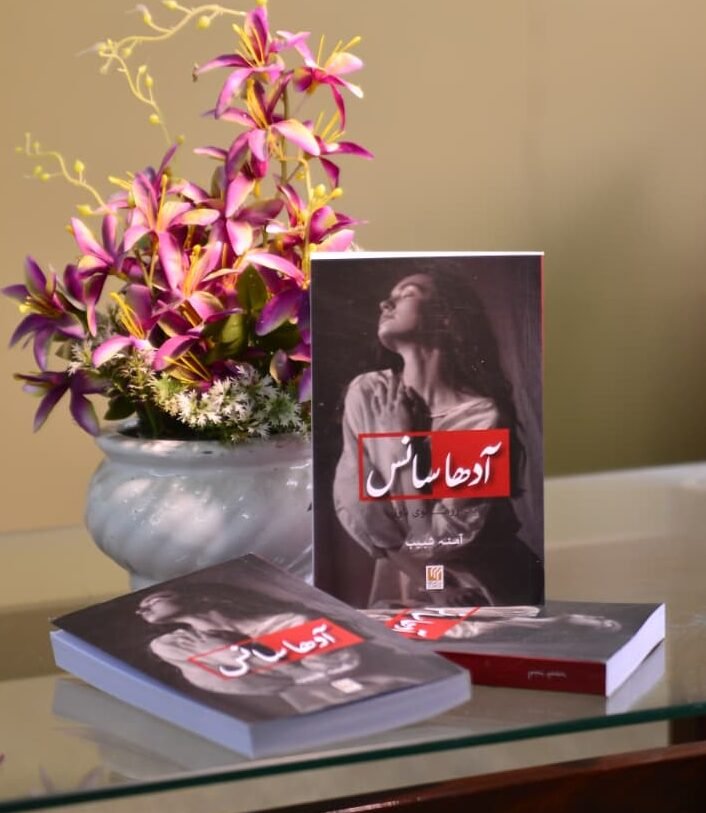
Amna Shabib’s Debut Novel
Some distances can only be crossed with words.
“A story about the distance between two people, and the words it takes to close it.”
Available as a digital PDF and printed copy.
Explore Aadha Saans
About Amna Shabib
Amna Shabib is a novelist, scriptwriter, and storyteller who writes in Urdu and English. She is the author of the debut novel Aadha Saans.
Read about AmnaPersonal Brand · Author Craft
What Should an Author About Page Include?
An author About page does not need your entire life story. It needs enough of the right story to help a reader understand who you are, what you write, and why they might want to stay.
A reader arrives on an author website with a small question that can feel surprisingly intimate: Who is the person who wrote this?
That is what an About page is there to answer. Not everything. Not your entire childhood, your complete employment history, or a catalogue of every certificate you have ever earned. A good author About page gives a reader a clear sense of who you are, what you write, what matters in your work, and where they can go next.
If you have been searching for author About page examples, the useful thing to study is not a particular template. It is the thinking underneath the page. The strongest examples usually understand that an About page sits between biography and invitation. It introduces the writer, but it also opens a door into the work.
Start with the question your reader is really asking
Before writing a single paragraph, I find it helpful to imagine the reader arriving after seeing a book cover, reading a story, hearing your name, or finding one of your articles.
They probably are not asking, “Can I have the complete chronology of this person’s life?”
They are asking something closer to: Who is this writer, what kind of stories does this person tell, and do I want to know more?
That changes the page immediately.
Your About page becomes less like a résumé and more like a conversation. You still need facts. In fact, factual clarity is part of what makes a page trustworthy. But facts need shape. They need a reason for being there.
For a novelist, that might mean naming the kind of fiction you write, introducing the themes you return to, mentioning your published work, and giving readers a small glimpse of the person behind it. For a screenwriter, the emphasis might naturally include scripts, genres, credits, or the kinds of stories you develop. The details change with the writer. The reader’s need for orientation does not.
The essential pieces of a strong author About page
There is no single formula that every writer needs to follow, but I would build an author About page around a handful of useful pieces.
1. A clear introduction
The first few lines should tell the reader who you are without making them work for it.
Your name should be easy to find. So should your role. “Novelist and scriptwriter” tells me something immediately. “Writer, storyteller, dreamer, believer in magic…” may sound attractive, but it leaves me waiting for the concrete information.
You can be warm without becoming vague.
2. What you write
Tell readers what lives on the other side of your name.
Do you write novels? Screenplays? Essays? Poetry? Children’s fiction? Literary fiction? Romance? Crime? Or several forms at once?
You do not need to reduce yourself to a marketing label if your work resists neat categories. But a reader should leave the opening section with some understanding of your creative territory.
3. Your author story
This is where the About page can become more human.
You do not need to tell your whole life story. Instead, consider the smaller question: What helps explain the writer I am today?
Perhaps there is a recurring subject in your work. Perhaps you move between languages. Perhaps you are interested in the space between what people say and what they leave unsaid. Perhaps your work keeps returning to family, memory, displacement, desire, belonging, humour, or grief.
That kind of detail gives readers something to hold onto.
4. Your books or major work
If you have published books, make them easy to find. If you are a debut author, one book is enough. You do not need to make a single title look like a disappointing bookshelf by surrounding it with unnecessary filler.
For a working screenwriter, the equivalent might be selected scripts or relevant credits. The principle is the same: show the reader what you actually make.
5. Relevant credentials
Credentials belong on an About page when they help the reader understand your work or establish useful professional context.
That might include a publication, award, relevant professional background, or documented role. It does not mean every achievement needs to be given equal space.
I tend to think of credentials as supporting characters. They matter, but they should not take over the story.
6. A real photograph
A photograph does something words cannot quite do. It gives the name a face.
It does not have to look stiff or corporate. It simply needs to be clear, appropriate to your public author identity, and recognisably you. The photograph and the writing should feel as though they belong to the same person.
7. A next step
An About page should not end in a dead end.
Once a reader has learned who you are, make the next useful choice obvious. They might want to explore your books, read your work, contact you, follow your updates, or learn more about a particular project.
The important thing is not to give them twelve competing instructions. Give them somewhere natural to go.
A simple About-page checklist
- Your name and clear author role
- A concise explanation of what you write
- A personal or creative thread that makes the page feel human
- Relevant books, scripts, or other major work
- Credentials that genuinely add context
- A good author photograph
- A clear next step for the reader
Your About page should sound like you
This is the part I care about most.
You can have every correct ingredient on the page and still end up with something that feels strangely lifeless.
A writer’s About page should have some relationship to the voice of the work. That does not mean turning the biography into a piece of fiction. It means allowing your natural way of speaking to survive the editing process.
If your novels are intimate and observant, an About page that suddenly sounds like a corporate press release will create a small emotional distance. If your work is playful, the page can have some playfulness. If your work is spare, there is no need to decorate every sentence.
I want an About page to tell the truth about the writer without making the writer disappear behind the biography.
One useful test is to read the page aloud.
Listen for sentences you would never actually say. Listen for grand claims that feel larger than your work. Listen for phrases that could belong to almost any writer on the internet.
Then replace them with something specific.
“I am passionate about storytelling” tells me very little.
“I write about the places where people struggle to say what they mean” gives me a direction.
The second sentence does not need to be true for every writer. That is exactly why it is useful: it has a point of view.
Think in layers rather than writing one giant biography
One of the easiest mistakes is trying to make the About page perform every possible job at once.
It becomes a long biography, a press release, a book description, a résumé, a personal diary, and a contact page all squeezed together.
Readers usually do not need all of that in one breath.
A cleaner structure is layered:
- First layer: who you are and what you write.
- Second layer: the creative interests, experiences, or themes that help explain your work.
- Third layer: selected books, credits, credentials, or other relevant professional information.
- Final layer: where the reader can go next.
This also helps readers who are scanning. Someone who only has ten seconds can understand the essentials. Someone who wants to know you better can keep reading.
And that is important because not every visitor arrives with the same purpose. A curious reader may want the human story. A journalist may need a concise biography. A potential collaborator may be looking for professional information. Your page can accommodate all three without becoming cluttered.
What author About page examples can teach you
When you look at other author websites for inspiration, I would resist copying their exact wording or layout. Instead, look for the decisions they have made.
For example, imagine three fictional authors.
The first is a debut novelist. Her About page focuses on what she writes, the concerns that draw her to fiction, and her first novel. She has few credentials, so she does not pretend otherwise. The page is personal because it has something real to say.
The second is an established novelist with several books. His page gives more space to publications and professional history, because that information is genuinely useful to visitors. The personality remains, but the balance has changed.
The third is a screenwriter who also publishes fiction. Her page explains both sides of her work and helps the reader understand how the two forms sit together.
None of these pages needs to look identical.
That is the lesson.
Use examples to notice structure, hierarchy, tone, and reader experience. Do not use them as instructions to become someone else.
What to leave off your About page
Knowing what to remove can be as useful as knowing what to add.
Your entire life chronology
A reader does not need every school, job, move, course, and milestone unless those details are directly relevant to your work.
Every achievement in equal-sized type
If everything is presented as equally important, nothing feels important. Choose the information that helps this particular reader understand you.
Private information you do not actually want public
An About page is public. You can be warm without surrendering your boundaries. Personal does not have to mean exposed.
Claims you cannot comfortably support
Be especially careful with phrases such as “award-winning,” “bestselling,” “widely acclaimed,” or “one of the most…” If a claim matters, make sure it is accurate and appropriately specific. Trust is much harder to rebuild than it is to preserve.
A biography that could belong to anybody
“Passionate storyteller” is pleasant but interchangeable. Your actual subjects, forms, languages, books, and creative concerns are much more interesting.
Make the page useful for more than one kind of visitor
A good About page can quietly serve several audiences without becoming a maze.
For readers: make your voice and books easy to understand.
For professional contacts: make your role, relevant work, and credentials clear.
For people discovering you for the first time: give them enough context to understand why they have landed on your site.
For future readers: leave a clear path toward your books or other work.
This is why I like the idea of the About page as a bridge. One side is the person. The other side is the work. The page should let the reader cross between them naturally.
A simple structure you can actually write
If you are staring at a blank About page, do not begin by trying to write the perfect biography. Start with five plain answers.
- Who am I as a writer?
- What do I write?
- What subjects or ideas keep pulling me back?
- What work should a reader know about?
- What would I like the reader to do next?
Write the answers badly if necessary. A rough truth is more useful than a polished cliché.
Then shape them into three or four paragraphs.
The first establishes you. The middle gives the reader a sense of your creative world. The final part points towards your work and offers a next step.
That is enough to begin.
You can add a longer biography, professional information, photographs, interviews, selected appearances, or other material later if your work requires it. An About page is allowed to grow with an author.
It does not have to prove everything on the first visit.
Frequently Asked Questions
What should an author About page include?
An author About page should usually include your name and role, what you write, a concise author story, relevant books or professional work, useful credentials, an author photograph, and a clear next step for visitors.
Should an author About page be written in first or third person?
Either can work. First person often feels warmer and more conversational, while third person can be useful when the biography also needs to serve professional or media purposes. Choose the voice that feels truthful to the rest of your author presence.
How long should an author About page be?
There is no useful universal word count. It should be long enough to introduce you, explain your work, and give readers meaningful context without turning into an autobiography. For many authors, a few focused paragraphs are enough.
What should a debut author put on an About page?
A debut author can focus on who they are, what they write, what draws them to their subjects, and their debut book. You do not need a long list of awards or publications to make an About page worth reading.
Amna Shabib’s Debut Novel
Some distances can only be crossed with words.
“A story about the distance between two people, and the words it takes to close it.”
Available as a digital PDF and printed copy.
Explore Aadha Saans
About Amna Shabib
Amna Shabib is a novelist, scriptwriter, and storyteller who writes in Urdu and English. She is the author of the debut novel Aadha Saans.
Read about Amna