
Meet Amna Shabib: Novelist, Scriptwriter and Storyteller
A closer look at Amna Shabib, her work across novels and scripts, and the stories she brings to readers in Urdu and English.
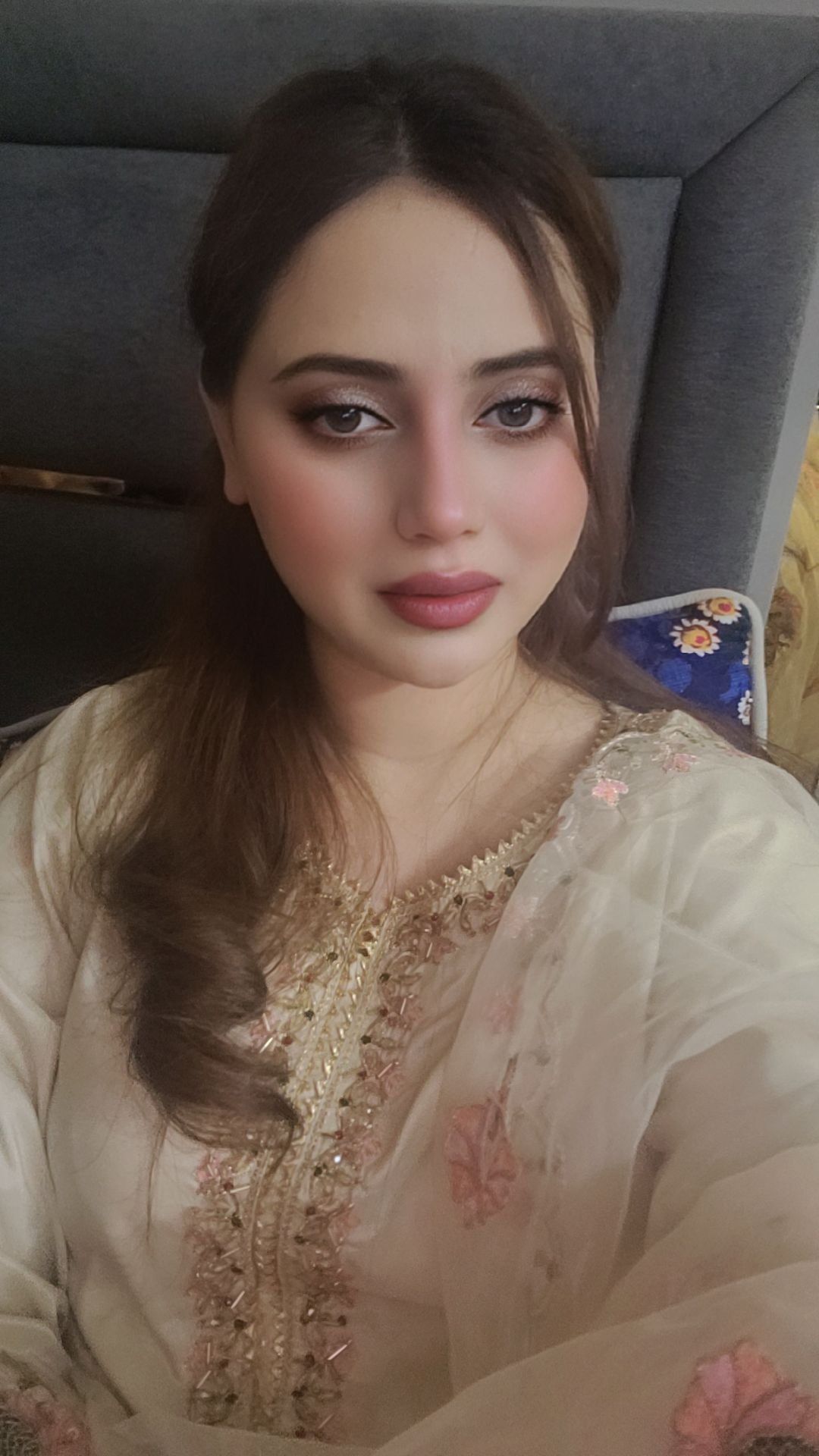

A writer’s name can tell you very little until you know what she is trying to do with stories. Behind a novel is a voice. Behind a script is an understanding of movement, conflict and silence. Behind storytelling, perhaps most importantly, is the desire to make another person stop for a moment and feel something.
I am Amna Shabib, a novelist, scriptwriter and storyteller. I write in Urdu and English, and my debut novel is Aadha Saans. This page is a simple introduction to the work I do and to the kind of literary space I hope my stories create for readers.
Who is Amna Shabib?
Amna Shabib is a novelist, scriptwriter and storyteller who writes in Urdu and English. She is the author of the debut novel Aadha Saans.
For me, these three descriptions—novelist, scriptwriter and storyteller—belong together. They describe different forms of working with words, but at the centre of all three is the same fascination: people, their inner lives, what they say, what they leave unsaid, and the distances that can grow between them.
A writer does not always need a grand subject. Sometimes a story begins with something quieter: a feeling that refuses to disappear, a relationship that has changed, a sentence that arrives too late, or a question that a character cannot answer easily. Those small emotional movements can become the beginning of something much larger.

From the page to the screen
Novel writing and scriptwriting use different structures, but both ask a writer to understand character and story deeply. A novel can stay close to a character’s inner world through narration and reflection. A screenplay has to communicate through what can be seen, heard and experienced.
That difference makes storytelling interesting to me. The same emotional truth can require different language depending on the form. A novel may give us access to a thought. A script may need a gesture, a look, an action or a line of dialogue to carry that same feeling.
The form changes, but the question remains familiar: what does this person want, what stands in the way, and what changes because of it?
This is also why I think storytelling is larger than any one format. A story can live on a page, in a script, or in the quiet space a reader creates while imagining what happens next.
“For me, a story begins to matter when the people inside it feel emotionally real enough for us to recognise something of ourselves in them.”
Writing in Urdu and English
Language is more than a container for a story. It carries rhythm, cultural texture, intimacy and the particular shape of a thought. Writing in Urdu and English gives me two languages through which stories can find their natural expression.
Urdu has an extraordinary emotional and literary richness. English has its own rhythms and possibilities. The important thing, to me, is not to make a story sound artificially literary in either language. It is to let the language serve the emotion, the character and the moment.
Readers also bring their own histories to language. The same sentence can land differently depending on what a reader has lived, lost, remembered or hoped for. That is one of the quiet pleasures of storytelling: once a story reaches another person, it begins to have a life beyond the writer.
Aadha Saans: my debut novel
My debut novel is Aadha Saans. Its central idea is captured in its verified tagline: “A story about the distance between two people, and the words it takes to close it.”
That idea speaks to a very human experience. Distance is not always measured in miles. Two people can sit close to one another and still find themselves separated by things they cannot say. Sometimes the hardest part is not feeling something. It is finding the words for it.
That emotional territory is naturally connected to the larger questions I find interesting as a storyteller: what people hide, what they reveal, and how relationships are shaped by the words that are spoken as well as the ones that remain unfinished.

What matters to me as a storyteller
I tend to return to emotional truth. Not because every story needs to be heavy, but because even a simple scene becomes memorable when the emotion underneath it feels honest.
I also believe characters deserve room to be complicated. People rarely behave according to a single neat explanation. We can love someone and be angry with them. We can want to leave and still hope they ask us to stay. We can know what we should say and remain completely unable to say it.
Those contradictions are not problems that a writer always needs to solve. Sometimes they are the story.
Storytelling, at its best, allows those contradictions to remain human. It gives us a little distance from our own lives and, strangely, can help us see them more clearly.
Why readers become part of a writer’s world
A writer begins alone with words, but a story is completed in the imagination of a reader. Every reader brings a different memory, emotion and way of seeing to the same page.
That is why I think the relationship between a writer and reader is a quiet one. There is no need for a writer to explain every feeling. Sometimes the most meaningful connection happens when the reader recognises something without being told exactly what to feel.
If you have arrived here because you were searching for Amna Shabib the writer, I hope this page gives you a clear beginning: I am a novelist, scriptwriter and storyteller, I write in Urdu and English, and my debut novel is Aadha Saans.
There is much more to discover in any writer’s work than a short biography can contain. A biography can tell you who wrote the story. The story itself is where the deeper conversation begins.
Frequently Asked Questions
Who is Amna Shabib?
Amna Shabib is a novelist, scriptwriter and storyteller who writes in Urdu and English. She is the author of the debut novel Aadha Saans.
What is Amna Shabib’s debut novel?
Amna Shabib’s debut novel is Aadha Saans. Its verified tagline describes it as a story about the distance between two people and the words it takes to close it.
Does Amna Shabib write in English and Urdu?
Yes. Amna Shabib writes in both Urdu and English, working across storytelling, novel writing and scriptwriting.
Where can I learn more about Amna Shabib?
You can visit the author’s About page for a concise introduction to Amna Shabib and her work.
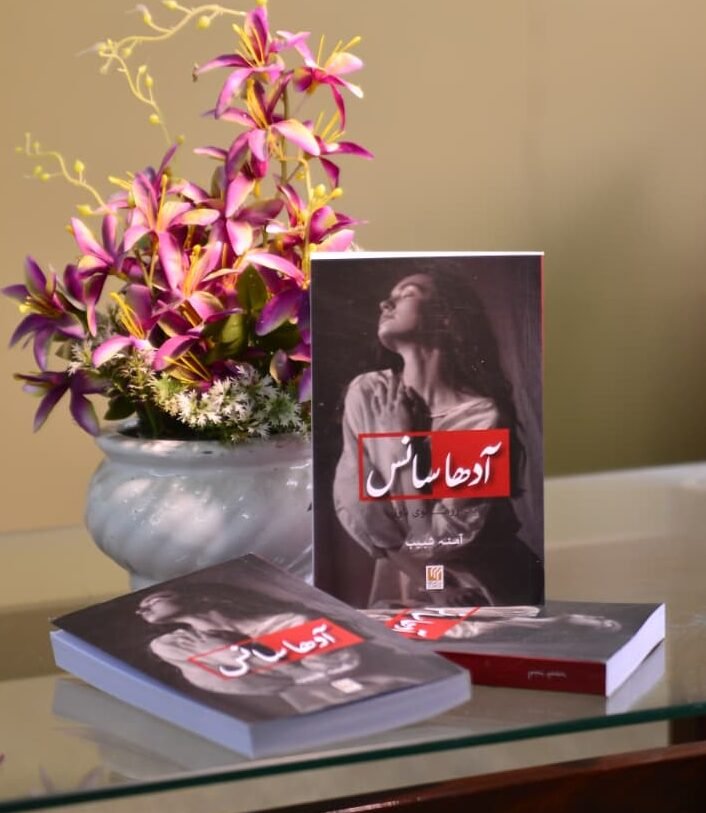
Amna Shabib’s Debut Novel
Some distances can only be crossed with words.
“A story about the distance between two people, and the words it takes to close it.”
Available as a digital PDF and printed copy.
Explore Aadha Saans
About Amna Shabib
Amna Shabib is a novelist, scriptwriter, and storyteller who writes in Urdu and English. She is the author of the debut novel Aadha Saans.
Read about Amna